Why Is Cyber Security Important: Essential Insights
6th August 2025 | Blogs
6th August 2025 | Blogs

Let’s be honest, in today’s digital world, cybersecurity isn’t just another box to tick. It’s something every business, big or small, has to think seriously about. The reality is, the threats we’re up against now are nothing like they used to be. We’re talking about cybercriminals who are constantly evolving their tactics, launching attacks that can disrupt your operations, drain your finances, and leave your reputation in tatters. And here’s the thing. This isn’t just a technical issue. It’s a strategic business concern. Why? Because if your customers can’t trust you to protect their data, they’ll go somewhere else. Trust is fragile. Once it’s gone, it’s incredibly hard to win back.
Now, if you’re a small business, we know what you might be thinking: “We’re not big enough to be a target.” But unfortunately, that’s exactly why you’re being targeted. Cybercriminals often see small businesses as easy pickings because they don’t always have the resources or systems in place to put up a strong defense.
Here’s the good news. Putting the right cybersecurity measures in place doesn’t just protect you from attacks. It can actually save you money in the long run. Think about it: fewer incidents, less downtime, no regulatory fines, and a whole lot less stress. That’s why cybersecurity needs to be built into your business strategy from the get-go. It’s not just about risk prevention anymore. It’s about resilience, reputation, and having a real competitive edge.
Let’s break a myth right now. Cybersecurity is not just about installing antivirus software or having a good firewall. That’s just one piece of the puzzle. Real, effective cybersecurity is about people, processes, and technology all working together. It’s about creating a mindset that says, “We take this seriously, and everyone has a role to play.”
So, what should you be focusing on? Well, there are a few core areas every business needs to think about.
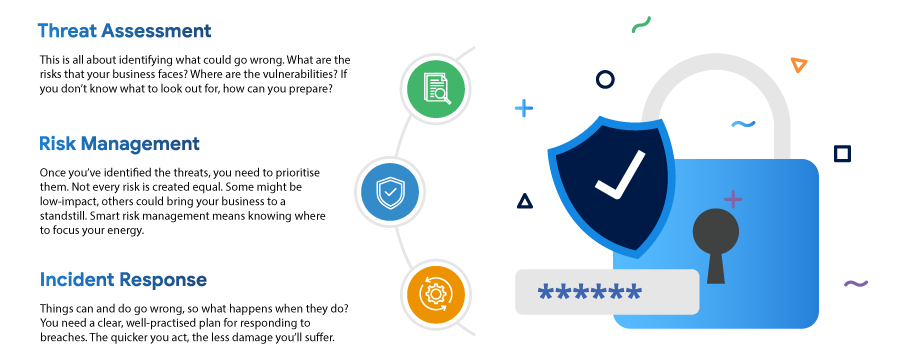
And let’s not forget about policies. Having a proper cybersecurity policy isn’t just about covering your back. It’s about setting expectations, defining acceptable use of tech, and making sure everyone, from the CEO to the intern, knows what’s expected of them. On top of that, regular training goes a long way. A lot of breaches happen because someone clicked a dodgy link or used a weak password. Educate your team, and you turn them into your first line of defence.
Here’s the uncomfortable truth. Cyber threats are getting smarter every single day. And no matter what industry you’re in, no matter how big your company is, you’re at risk. That’s just the nature of the digital age.
With remote work becoming the norm, your business’s attack surface has expanded. People are working from home, from coffee shops, from hotels, and they’re connecting to your network from all over the place. That flexibility is great for productivity, but it also creates new security challenges. Now, a lot of small business owners still think they’re flying under the radar. But cybercriminals know that small companies often don’t have the same resources or protections in place. That makes them easier targets.
So, what kind of threats should you be watching out for?
The best thing you can do is stay informed. That means regular security audits, staying on top of updates, and being ready to pivot when new threats emerge. It’s not about fear, it’s about being prepared.
Let’s talk about what really happens when a cyber-attack hits your business. It’s not just about losing data or having your systems offline for a while. The impact runs much deeper and it sticks around long after the immediate mess is cleaned up.
Financially, the losses can be staggering. It’s not just the cost of fixing what’s broken. It’s the downtime, the lost sales, the emergency IT support, and the potential fines if you’ve fallen short on compliance. Add it all up, and you’re looking at damage that can seriously hurt your bottom line.
Then there’s your reputation. If customer data is breached, it doesn’t take long for word to get out. People talk. Reviews turn sour. Clients lose trust. And winning that trust back? It takes time, transparency, and a whole lot of reassurance.
Legal issues are another heavy hitter. Depending on the regulations in your industry, a breach could land you in hot water with the authorities. Non-compliance with things like GDPR or Cyber Essentials can lead to hefty penalties. And let’s not forget the possibility of lawsuits if customers or partners feel they were put at risk.
Here’s a breakdown of what’s at stake:
If you’re still seeing cybersecurity as just an IT cost, it’s time to reframe that thinking. It’s not just about stopping threats, it’s about protecting everything you’ve built.
There’s a dangerous myth floating around that small businesses aren’t attractive to cybercriminals. But let us tell you, that couldn’t be further from the truth.
In reality, small businesses are often targeted more precisely because attackers assume you won’t have the same defences as a large corporation. They see smaller organisations as low-hanging fruit — quick wins with little resistance. And unfortunately, they’re usually right. When a breach hits a small business, the effects are often devastating. Unlike big companies, you might not have a backup team of lawyers, IT pros, and PR consultants ready to jump in. Recovery can be slow, costly, and incredibly disruptive. Even worse, it’s not just about internal disruption. Customers expect their data to be safe, no matter the size of the company they’re dealing with. If you lose that trust, you could lose the customer for good.
So what do small businesses really need?
Cybersecurity isn’t a luxury for small businesses anymore. It’s a lifeline.
Let’s break it down. A solid cybersecurity strategy doesn’t just magically happen because you bought the latest software. It’s built on a balance of three key elements: technology, people, and processes. Leave one out, and the whole thing can fall apart.
1. Technology
This is the foundation. You need the right tools to protect your network, systems, and data. We’re talking firewalls, intrusion detection, encryption, backup solutions, and multi-factor authentication. But here’s the catch, those tools need to be kept up to date. What worked last year might not be enough today.
2. People
Even the best tech in the world can’t save you if your team isn’t clued in. Most breaches happen because of human error. Someone clicks a dodgy link or uses "password123" to log into sensitive systems. That’s why regular employee training is absolutely essential.
3. Processes
Good cybersecurity relies on clear, consistent processes. You need policies that outline acceptable use, procedures for reporting suspicious activity, and step-by-step plans for what to do if an incident occurs. These need to be written down, shared widely, and updated often.
When these three components work together, your defences become smarter, faster, and much more effective.
Let’s look at what we’re really up against out there. Cyber threats come in all shapes and sizes and they’re getting more sophisticated all the time. If you don’t understand the types of attacks happening out there, it’s tough to prepare for them.
Phishing
This one is all about trickery. Attackers send emails that look legit, trying to get employees to hand over passwords or click malicious links. It’s one of the most common tactics because it works. And it only takes one click to cause chaos.
Ransomware
This is the digital version of a hostage situation. Cybercriminals encrypt your data and then demand payment to unlock it. It can shut down your entire operation and cost thousands, sometimes more.
Advanced Persistent Threats (APTs)
These are long-game attacks. Hackers quietly infiltrate your network and stick around, watching and stealing data over time. They’re sophisticated, hard to detect, and usually backed by serious funding.
Understanding these threats is the first step in fighting them. If your team knows what to look out for and your systems are set up to detect unusual activity, you’re already ahead of most businesses.
So here’s the bottom line…
If you’ve been feeling like your business is constantly putting out fires instead of focusing on growth, or if your team is stuck doing manual tasks that could easily be automated, then now’s the time to explore how we can help. Because the truth is, you don’t have to choose between running a secure business and an efficient one. You can absolutely have both and more with the right tools and partners in place.
At Workflo Solutions, we live and breathe this stuff. We work with businesses across the UK every day to help them make sense of the chaos, take control of their data and processes, and build workflows that actually work. Not just for today, but for the long term.
If you’ve got questions, or just want to explore what’s possible, we’re always up for a conversation; no pressure, no sales pitch, just a real chat about what matters to your business and where you want to go.
Let’s make your workflow work for you.
Ready when you are..
